Small Bathroom Ideas: Smart Design Tricks for Tiny Spaces
Small bathroom ideas and practical design tips for compact spaces.
When space is limited, every inch counts. As a seasoned interior design professional focused on baths, I help homeowners transform compact bathrooms into comfortable, efficient rooms without sacrificing style. This article provides small bathroom ideas that combine layout planning, durable materials, and cost-conscious choices, all aligned with industry best practices for safety and quality. The goal is to deliver actionable guidance that improves usability, storage, lighting, and perceived space while respecting budget and timelines.
Smart design principles for small bathrooms
Start with a clear plan. Measure everything—door swings, plumbing lines, and the location of the existing vent. Create a simple floor plan on grid paper or a digital tool, prioritizing zones for wet areas (shower or tub) and dry zones (vanity and storage). For EEAT credibility, rely on proven principles: vertical storage, wall-mounted fixtures, and reflective surfaces that expand the sense of space while remaining durable in humid environments.
Plan and measure
- Choose compact fixtures that suit your needs: a pedestal or wall-mounted sink, a compact vanity with storage, and a slim toilet.
- Prefer wall-mounted options to free floor space and improve cleaning access.
- Consider a pocket door or a barn-style door to save circulation space.
Space-saving fixtures and furniture
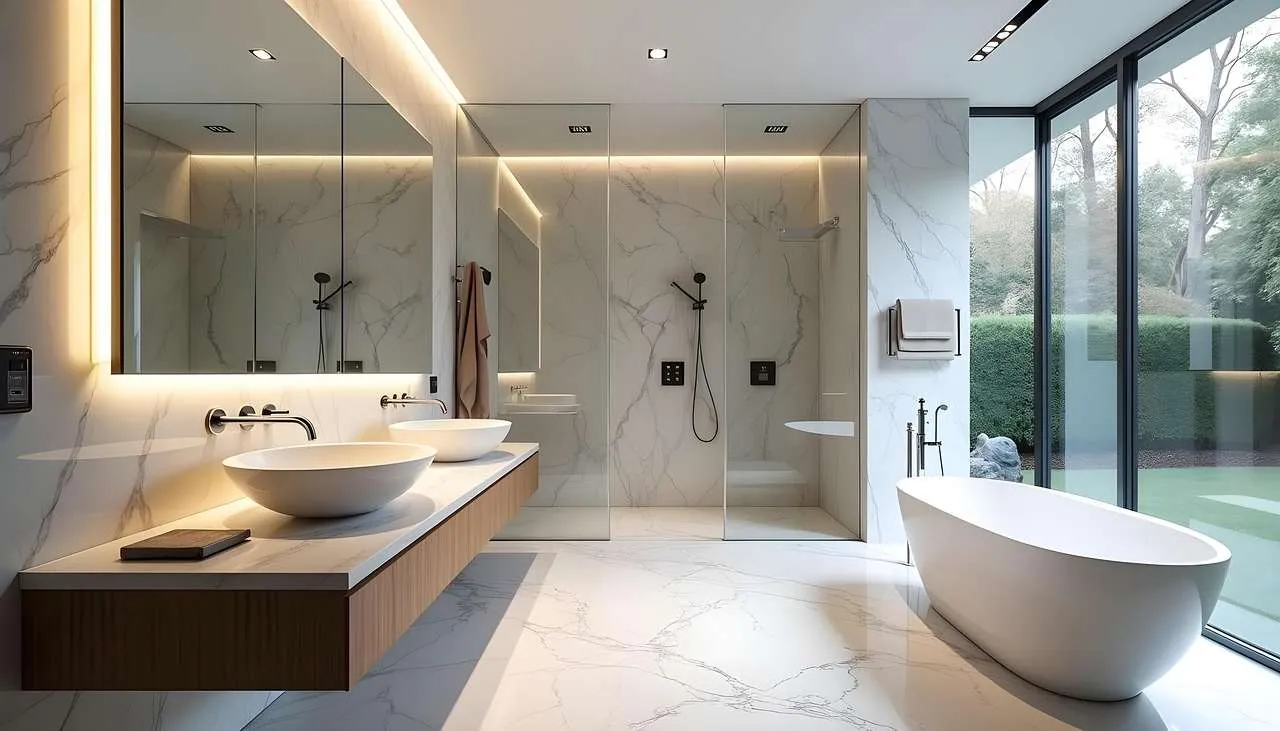
Furniture and fixtures that hug the wall or recede into the space create breathing room. A floating vanity, a recessed medicine cabinet, and a wall-mounted toilet reduce visual bulk. In a shower, consider a curved or neo-angle enclosure to maximize space, or even a curbless shower for a seamless look. For storage or laundry options, stackable units or slim vertical cabinets add function without crowding.
Color, lighting, and reflections
Light colors reflect more light and visually widen rooms. Whites, creams, and pale grays paired with large-format tiles reduce grout lines and make surfaces feel expansive. Install multiple light sources—task lighting around the mirror, ambient lighting in the ceiling, and a skylight if possible. Use mirrors generously; a full-wall mirror or mirrored cabinet doubles the perceived size while remaining practical for daily routines.
Smart storage ideas
Storage is the backbone of small bathroom ideas. Use recessed niches in the shower, shallow wall cabinets above the toilet, and over-door organizers. A tall, slender cabinet can store towels and toiletries without eating into floor space. Consider baskets inside cabinets, pull-out drawers, and labeling to keep items accessible and neat.
Layout examples and a quick comparison
Here are a few common configurations that work well in compact baths:
| Option | Cost Level | Pro | Con | Best For |
|---|---|---|---|---|
| Floating vanity with under-sink storage | Medium | Open floor, easy cleaning, storage | Can be pricey; needs proper installation | Small baths needing storage without bulk |
| Wall-mounted toilet | Medium | Less visual bulk, easier cleaning | Requires secure wall support | Extremely tight spaces |
| Corner shower or neo-angle | Low–Medium | Maximizes footprint | Less seating and larger showers | Shower-first layouts |
| Pocket door | Medium | No swing space needed | More complex framing | Small floor plans with tight corridors |
| Glass shower enclosure | High | Visual openness | Maintenance of glass | Bright, open feel |
Materials, fixtures, and budget considerations
Durability matters in humid spaces. Choose water-resistant flooring such as porcelain or luxury vinyl plank, and select groutless or wide-grout tiles to reduce maintenance. For fixtures, prioritize soft-close hinges, durable finishes (nickel, chrome, or matte black), and reliable showerheads with adjustable spray patterns. If your budget allows, upgrade with smart storage systems and high-quality mirrors to enhance functionality and longevity. Even on a tight budget, phasing renovations—focus on critical improvements first, then add cosmetic updates—delivers EEAT-like results by balancing quality and cost.
Conclusion or Summary
Summary: The core ideas for small bathroom ideas are careful planning, choosing space-saving fixtures, smart storage, and light-reflective finishes. By mapping the layout, selecting wall-mounted elements, and implementing vertical storage, you can create a bathroom that feels larger, is easier to maintain, and fits your daily routines without compromises. The approach above blends practical design principles with durable materials and thoughtful budgeting to deliver a polished, functional space you can enjoy for years.